

Understanding Leverage In Forex Trading
Many people are attracted to forex trading due to the amount of leverage that brokers provide. Leverage allows traders to proceeds more than exposure in fiscal markets than what they are required to pay for. Traders of all levels should accept a solid grasp of what forex leverage is and how to use it responsibly. This article explains forex leverage in depth, including how it differs to leverage in stocks, and the importance of run a risk direction.
What is leverage in forex trading?
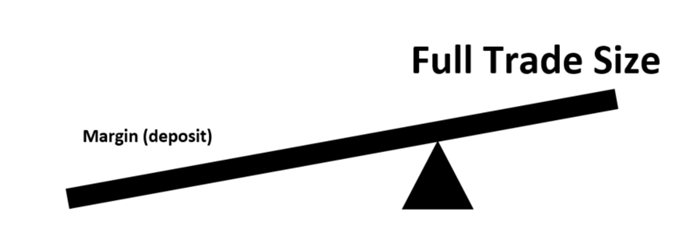
Leverage in forex is a useful fiscal tool that allows traders to increment their market place exposure beyond the initial investment (deposit). This means a trader can enter a position for $10,000 worth of currency and only need $1000, in a ten-to-one leverage scenario. However, it is essential to know that gains AND losses are magnified with the use of leverage. In adverse market place scenarios, a trader using leverage might even lose more coin than they have every bit deposit.
Leverage of ten-to-one means that traders can gain exposure to a notional value or trade size, ten times more the deposit/margin that is required to fund the trade. This tin can be idea of in a similar fashion to putting a 10% deposit down on a house; you gain access to the entire house while only funding x%of the full value.
Leverage is unremarkably expressed as a ratio:
| Leverage expressed in words | Leverage expressed equally a ratio |
|---|---|
| X-to-ane | 10:i |
| 30-to-one | 30:1 |
| Fifty-to-1 | fifty:1 |
The corporeality of forex leverage bachelor to traders is unremarkably made available through your banker and the amount of leverage volition vary according to regulatory standards that preside in different regions.
Leverage in forex vs leverage in shares
Forex leverage differs to the corporeality of leverage that is offered when trading shares. This is due to the fact that the major FX pairs are liquid and typically exhibit less volatility than even the most oftentimes traded shares. Every bit a upshot, hedging risk and getting in and out of trades is more manageable in the $5.i trillion a day FX market.
How is forex leverage calculated?
Traders crave the following to calculate leverage:
- The notional value of the merchandise (trade size)
- The margin percentage
Brokers oftentimes provide traders with a margin percentage to summate the minimum disinterestedness needed to fund the trade. Margin and deposit can be used interchangeably. Once you lot accept the margin percent, only multiply this with the trade size to detect the amount of disinterestedness needed to place the trade.
Disinterestedness = margin percentage 10 merchandise size
To calculate leverage, simply divide the trade size past the required equity.
Leverage = trade size / equity
Forex leverage example
Below is a typical example of how to calculate leverage using the above formulas:
- Trade size: x 000 units of currency (one mini contract on USD/JPY with a trade size equal to $ten 000)
- Margin percentage: 10%
Equity = margin percentage x trade size
0.i 10 $x 000
=$1 000
Leverage = trade size / disinterestedness
$10 000 / $1 000
= 10 times or 10:1
The example highlights the nuts of how forex leverage is used when entering a trade. Yet, it must be noted that traders should non only calculate the minimum amount needed to enter a merchandise and so fund the account with that exact amount. Traders must be mindful of margin calls if the position moves in the contrary management, bringing the account equity below an acceptable level determined past the broker.
Trading forex with leverage has the potential to produce large losses. Nosotros have calculated a typical scenario of how the employ of excessive leverage tin impact a trading account and tabulated the results.
How to manage forex leverage take a chance
Leverage tin be described every bit a two-edged sword, providing both positive and negative outcomes for forex traders. This is why it is essential to determine the appropriate effective leverage and incorporate sound run a risk management.
Elevation traders make use of stops to limit their downside risk when trading forex. At DailyFX nosotros recommend risking no more than than 1% of the business relationship equity on any single trade and no more than 5% of the account disinterestedness for all open trades at whatsoever point in fourth dimension.
Furthermore, successful traders make utilise of a positive risk-to-reward ratio in an attempt to attain higher probability trades over fourth dimension.
Information technology is vital to avoid mistakes with leverage; to understand how to avoid other issues traders might face check our Top Trading Lessons guide.
Leverage trading tips
- If you lot are new to forex exist sure to get up to date with the basics of forex trading through our New to FX guide.
- It is highly recommended to make use of stops when trading with leverage. Guaranteed stops eliminate the risk of negative slippage when markets are extremely volatile.
- Keep leverage to a minimum. At DailyFX we recommend ten% leverage, or less.
- Understand the margin policy of the forex broker to avoid margin call.
DailyFX provides forex news and technical analysis on the trends that influence the global currency markets.

Source: https://www.dailyfx.com/education/forex-trading-basics/what-is-leverage-in-forex-trading.html
Posted by: carpiosamissing.blogspot.com
0 Response to "Understanding Leverage In Forex Trading"
Post a Comment